
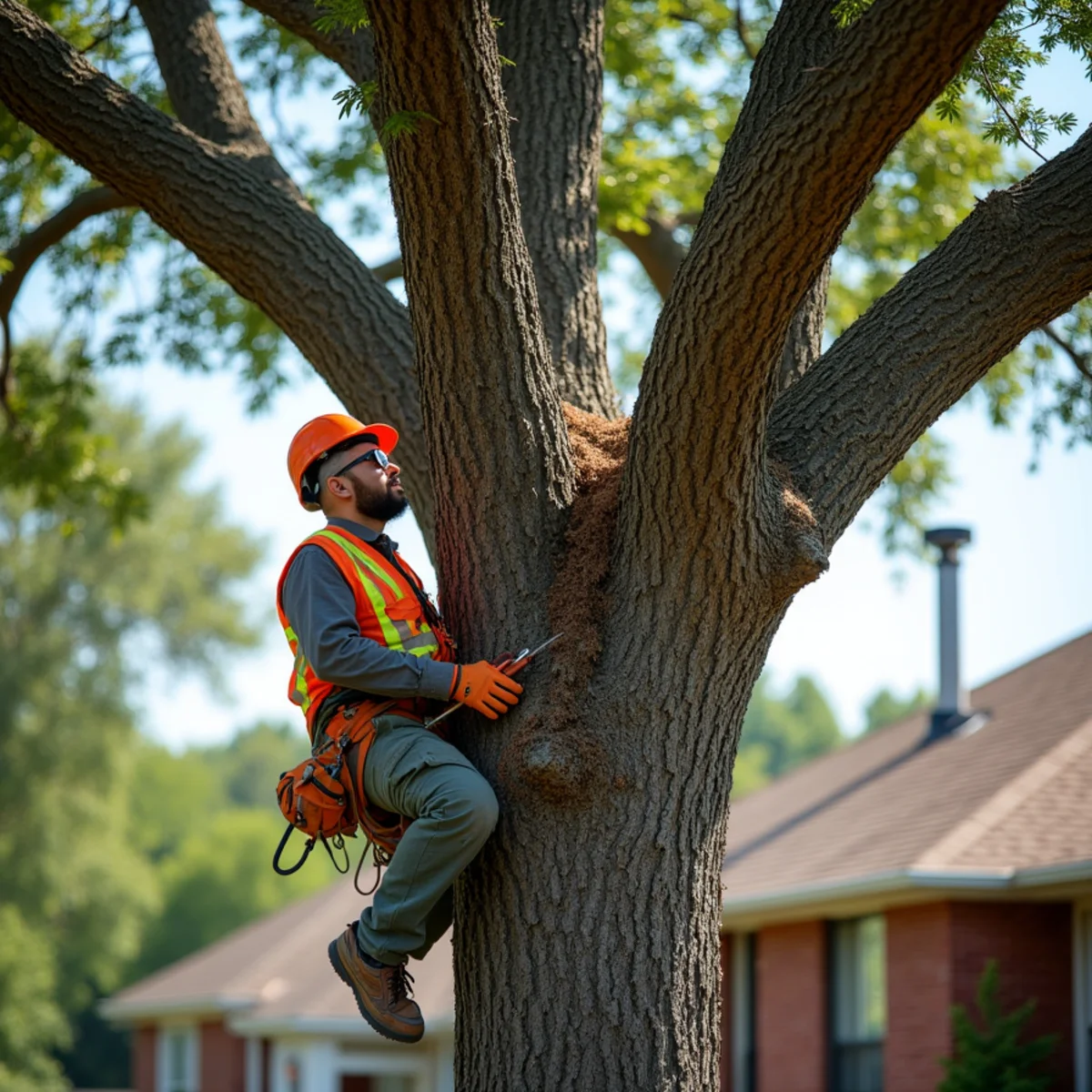
A mature live oak is the most valuable thing in most North Texas yards, and it is also the tree people damage most often with a chainsaw and good intentions. Live oaks are tough, but they respond poorly to bad cuts, and a large wound placed wrong becomes a column of rot that hollows the trunk from the inside over the next decade.
Pruning a mature live oak well is a game of restraint. You are guiding structure and removing genuine problems, not reshaping the tree to a picture in your head. Cut too much, cut in the wrong place, or cut at the wrong time of year, and you trade a small cosmetic gain for decay or, worse, oak wilt.
Here is how to prune a big live oak so it stays sound, following the ANSI A300 pruning standard our crews work to on every job.
Prune for a reason, and prune lightly
The first rule with a mature oak is that every cut needs a purpose. Good reasons to prune include removing dead or broken limbs, taking out crossing branches that rub, clearing the structure over the roof or driveway, and reducing a heavy limb that is overextended.
Chasing a shape is not a good reason. Mature oaks should never have more than a modest fraction of their live canopy removed in a single year, because the leaves are the tree's food factory. Strip too much and you starve the tree and force weak, watery regrowth. When in doubt, take less.
Where the cut goes determines whether it rots
Trees do not heal like skin; they seal. A tree walls off a wound by growing new tissue over it, and it can only do that if the cut is made in the right place. The key is the branch collar, the slightly swollen ring of tissue where a branch meets the trunk or a larger limb.
Cut just outside the collar and the tree closes the wound cleanly. Cut into or flush with the trunk, removing the collar, and you leave a wound the tree cannot seal, which is an open door for decay fungi. Leave a long stub instead, and it dies back and rots toward the trunk. Proper collar cuts are the single biggest factor in whether a big oak stays sound.
The size of the cut matters as much as its placement. A tree seals a two-inch wound quickly; a ten-inch wound on an old limb may never fully close before decay gets established. That is why good arborists remove a large limb by reducing it back to a living lateral branch that is at least a third the diameter of the cut, rather than lopping it at a random point. The lateral keeps sap flowing to the wound area and helps the tree wall off the cut. On a mature oak, taking one big limb off at the trunk is a decision to weigh carefully, because that wound will be with the tree for the rest of its life.
- Cut just outside the branch collar, never flush to the trunk
- Never leave stubs that the tree cannot seal over
- Use the three-cut method on heavy limbs so bark does not tear
- Remove no more than a small share of live canopy per year on a mature tree
The oak wilt timing rule you cannot ignore
With oaks, when you prune is as important as how. Fresh cuts attract the sap-feeding beetles that spread oak wilt, and the risk is highest during the warm months. Texas A&M AgriLife guidance has long advised avoiding oak pruning during the peak-risk season and painting every cut promptly.
Our practice is to paint every oak wound immediately, regardless of the calendar, and to schedule non-emergency oak pruning outside the high-risk window whenever possible. If a limb is dangerous and has to come off in summer, we still do it, we just take extra precautions. Never let a tree be pruned by anyone who shrugs off wound painting on oaks.
Common mistakes that ruin mature oaks
Most of the damaged oaks we are called to fix were hurt in avoidable ways. Watch for these.
- Topping or heading cuts that trigger weak, dense regrowth
- Lion-tailing, stripping the interior so all the weight is at the branch tips
- Over-thinning that sunburns exposed bark and starves the tree
- Flush cuts that remove the collar and cannot seal
- Unpainted summer cuts that invite oak wilt
Trust a big oak to trained hands
A mature live oak took generations to grow and can be ruined in an afternoon. The value of the tree, and the cost of getting it wrong, is exactly why this is work for a trained crew rather than a weekend project.
Our tree trimming and pruning teams prune live oaks to ANSI A300 standards, make clean collar cuts, and protect against oak wilt on every visit, and our broader residential tree care keeps the tree healthy between prunings. Homeowners in Southlake with signature oaks trust us to keep those trees sound for the long haul. Call (855) 615-0568 for a free estimate on expert live oak pruning.
The cut angle that decides whether an oak seals or rots
Mature live oaks compartmentalize decay well, but only if you cut in the right place. Every branch meets the trunk at a slightly raised ring called the branch collar, and that collar holds the tree's chemical defense that walls off a wound. Cut just outside the collar and the tree seals the spot over a season or two. Cut flush into the trunk, through the collar, and you have removed the very tissue that would have closed the wound, opening a straight path for rot into the trunk. Leave a long stub instead and it dies back and invites the same decay.
On old live oaks we also keep wounds small and few. These trees do not need heavy pruning; removing more than about a quarter of the live canopy at once stresses a mature oak and triggers water sprouts. The North Texas wrinkle is oak wilt: we avoid pruning oaks from February through June when the beetles that spread the fungus are active, and we paint every oak cut immediately year-round, regardless of season, because a fresh oak wound is an open invitation. Clean, sharp, sanitized tools between trees round out the difference between a tidy prune and a slow killer.
- Cut just outside the branch collar, never flush and never leaving a stub
- Remove no more than about a quarter of the live canopy in one season
- Avoid pruning oaks February through June for oak wilt, and paint every oak cut
- Sanitize tools between trees to avoid moving disease through the neighborhood