
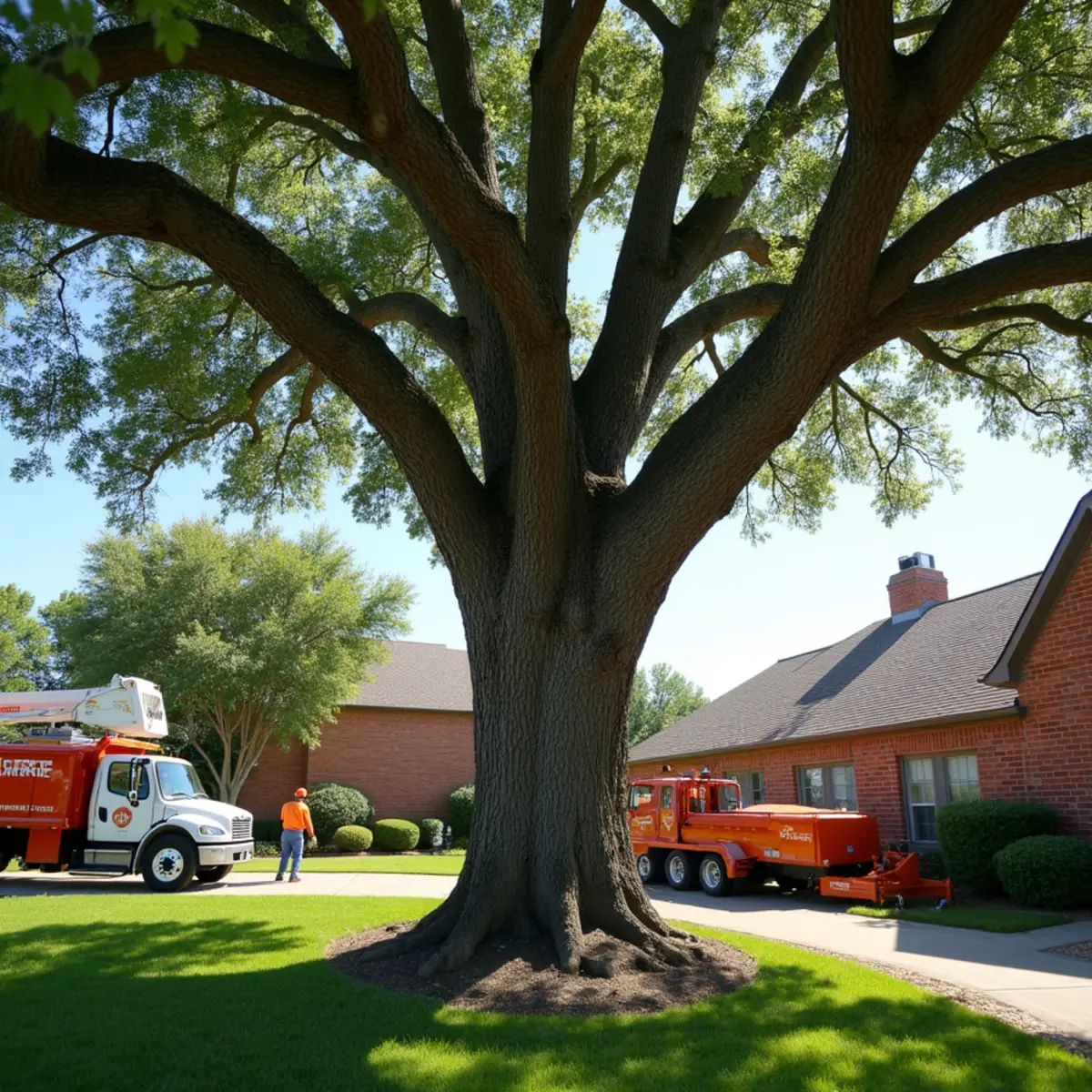
In Flower Mound, the big oak in your backyard may not be entirely yours to remove without a conversation with the town first. Many North Texas communities, and Flower Mound in particular, protect larger and specimen trees through local ordinances, and cutting one down without checking can mean fines, replacement requirements, or both.
This trips up homeowners constantly, especially new arrivals who assume a tree on their own lot is theirs to do with as they please. Sometimes it is. Sometimes it is a protected tree that requires a permit, an inspection, or a mitigation plan before a single cut is made.
We are not the town, and rules change, so always confirm the current requirements with the local authority. But here is the general lay of the land and how to handle it without stepping in a mess.
Why towns protect certain trees
Tree ordinances exist because a community's mature canopy provides shade, stormwater control, property value, and character that takes decades to replace. To protect that, many North Texas towns regulate the removal of trees above a certain trunk size, and they give extra protection to specimen and historic trees and to certain species.
The practical effect is that not every tree is a free removal. Smaller trees are usually exempt, but a large, healthy protected tree often cannot come down without a permit, and removing one anyway can trigger penalties and a requirement to plant replacements.
The penalties are not trivial, either. Depending on the community, removing a protected tree without approval can mean a fine plus a requirement to replace the lost trunk inches with new plantings, sometimes several trees for one, or a payment into a municipal tree fund calculated on the size of what you cut. A homeowner who quietly takes down a big protected oak to open up a yard can end up owing far more than the removal itself cost, and the obligation follows the property. That is the expensive surprise this whole process is meant to help you avoid.
What is typically regulated
Rules vary by town and change over time, but the common threads across North Texas ordinances look like this. Confirm the specifics for your address with the local Planning department before you do anything.
- A trunk-diameter threshold above which a tree is protected
- Extra protection for specimen, heritage, or certain native species
- A permit or approval requirement before removing a protected tree
- Mitigation, meaning you plant replacement trees or pay into a tree fund
- Exemptions for genuinely dead, diseased, or hazardous trees, often still requiring documentation
- Rules that apply during construction and lot development, not just to homeowners
The hazardous-tree exemption, and its catch
Most ordinances make an exception for trees that are dead, dying, or a genuine hazard, because no one wants to force a homeowner to keep a tree that is about to fall on the house. But the catch is that you usually have to prove it.
That typically means documentation, sometimes an assessment by a qualified professional, and often notifying the town rather than simply cutting. If you remove a protected tree and later claim it was hazardous without any record, you can end up owing mitigation anyway. This is where a proper written assessment protects you, not just the tree.
The order of operations matters. Do the assessment and file the paperwork before the saw comes out, not after, because a photo of a stump proves nothing about why the tree was cut. A dated report describing the decay, the lean, or the crack, ideally with photos of the standing tree, is what an official will accept as the basis for a hazard exemption. Reversing that order is the single most common way homeowners with a genuinely dangerous tree still end up on the wrong side of the ordinance.
How to handle it the right way
The clean path is simple: check before you cut. A short call to the town's Planning department, or a look at the current tree ordinance, tells you whether your tree is protected and what the process is. If it is protected and healthy, you go through the permit process. If it is hazardous, you document the condition properly before removal.
We help Flower Mound homeowners navigate exactly this. Our team provides the kind of written hazard documentation a town looks for, and our tree removal crews only take a protected tree down once the paperwork is in order. Our broader residential tree care can also tell you honestly whether a big protected tree needs to come down at all, or whether pruning solves the problem and keeps you out of the permit process entirely.
Check first, then call us
The order that keeps you out of trouble is: confirm the rule with the town, get proper documentation if the tree is hazardous, then remove. Skipping the first two steps to save a phone call is how homeowners end up with a fine and a replacement-planting bill.
If you have a large tree in Flower Mound you want gone, call (855) 615-0568 for a free estimate. We will assess the tree, help you understand what documentation the town may want, and handle the removal correctly once you are cleared to proceed.
What trips up homeowners under Flower Mound's tree ordinance
Flower Mound treats larger trees as protected, and once a tree crosses the size threshold the town sets for a protected or specimen tree, you generally cannot remove it without a permit and often a mitigation plan. The mistake we see most is a homeowner or builder removing first and learning about the rule after, which can mean replacement-inch requirements or fines far larger than the removal ever cost. Measuring diameter at 4.5 feet up the trunk, called DBH, is the first thing to get right before any decision.
The other friction is construction damage that the ordinance also covers. Scraping grade, trenching, or parking equipment over the critical root zone can kill a protected tree slowly, and the town can still hold you responsible. We help by documenting existing trees, flagging which ones are protected, and laying out tree protection fencing at the dripline before work starts. Where removal is genuinely justified, a clean arborist report on health and hazard is what makes a permit application move instead of stall.
- Measure DBH at 4.5 feet to know if a tree is protected before planning removal
- Never remove a qualifying tree without checking the permit and mitigation rules
- Fence the critical root zone before any construction or grading begins
- Support removal permits with a documented health and hazard assessment