
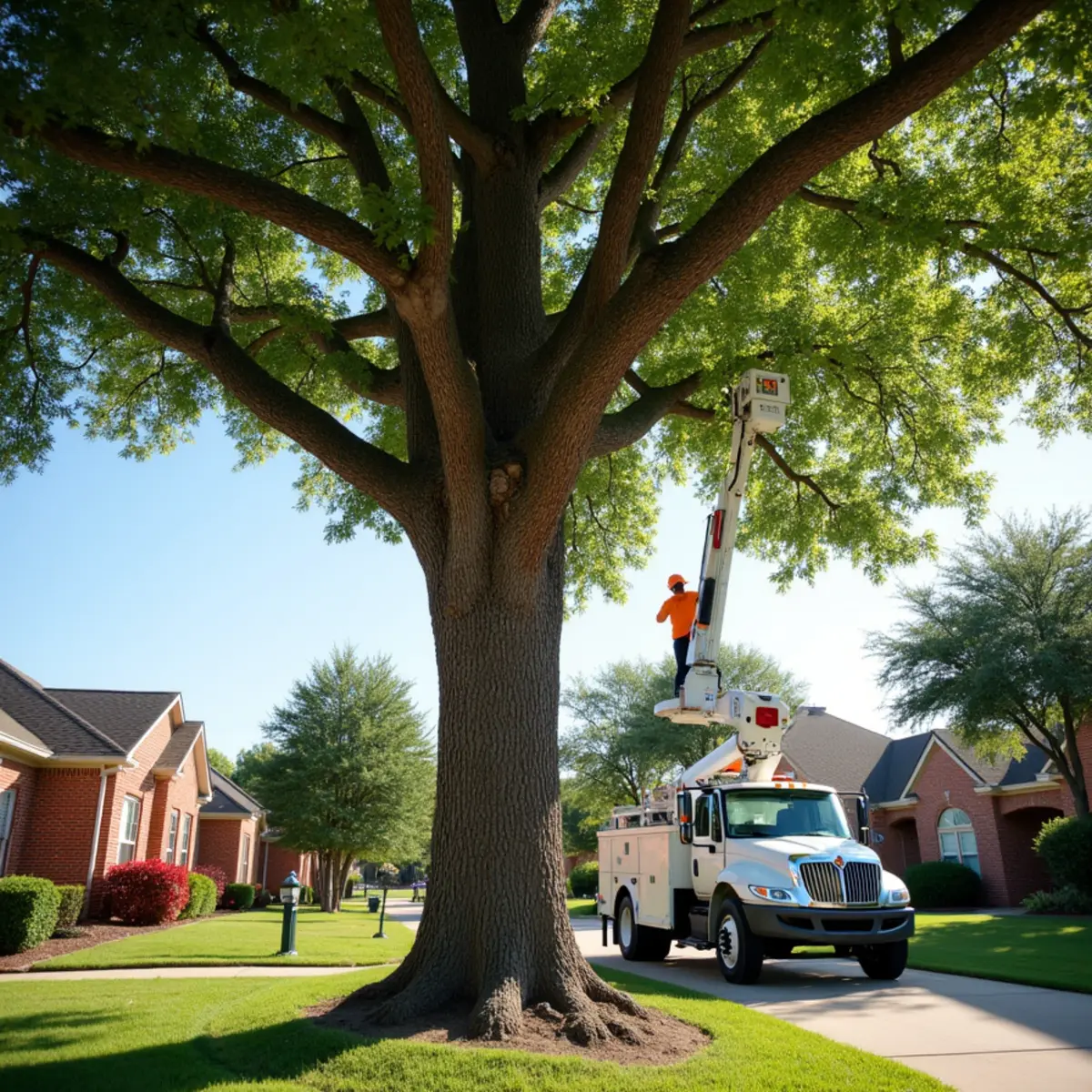
The native pecan is the Texas state tree and one of the grandest things you can have in a Grapevine yard, but a big pecan is also a lot of tree to manage. They grow tall and wide, they drop constantly, and they attract a specific set of pests, and when a pecan limb fails it is a heavy piece of wood coming from a long way up.
Homeowners who inherit a mature pecan often love the shade and the nuts and then get surprised by the maintenance: webworm nests taking over the canopy in late summer, deadwood accumulating in the crown, and the annual rain of hulls, twigs, and the occasional big limb. None of it is a reason to cut the tree down, but all of it needs managing.
Here is how to keep a towering native pecan healthy, productive, and safe.
Deadwood is the pecan's main safety issue
Pecans naturally shed. As the tree grows, lower and interior branches get shaded out and die, and the canopy accumulates deadwood that eventually breaks free. On a tree this tall, a dead limb dropping from 40 or 50 feet carries real force, and it tends to come down without warning on a still day.
Regular deadwooding, removing the dead and dying branches from the crown, is the single most important safety maintenance for a big pecan. It removes the limbs most likely to fall, cleans up the tree's structure, and lets you see the live canopy clearly to catch other problems. Our canopy thinning and deadwooding work keeps tall pecans from raining branches on the yard below.
Webworms: ugly, usually not fatal
In late summer, pecans across DFW get draped in the silky gray nests of fall webworms, which chew through leaves inside their webbing at the branch tips. It looks alarming, and a heavy infestation can cover much of a canopy, but on an established, otherwise healthy pecan it is rarely life-threatening to the tree.
The bigger issue is that homeowners try dangerous fixes, like burning nests out of the tree or blasting them with the wrong chemicals, and cause more harm than the worms would. On a large tree, reaching the nests safely is a job for equipment, not a torch on a pole.
The reason webworms rarely kill an established pecan comes down to timing. Fall webworms feed late in the season, after the tree has already banked most of the energy it needs from a full summer of leaves. Losing a chunk of foliage in September costs the tree far less than the same loss would in May. The trees that actually suffer are young, newly planted pecans, or trees already weakened by drought or poor soil, where repeated heavy defoliation year after year drains reserves the tree cannot rebuild. That is the case where a treatment plan earns its cost; on a big, vigorous shade pecan, patience and good watering usually do the job.
- Prune out reachable nests early, before they spread through the canopy
- Never burn webworm nests in the tree, which damages bark and risks fire
- Keep the tree vigorous with water and soil care so it shrugs off defoliation
- For heavy or repeated infestations, get a professional treatment plan
Living with hull drop and limb drop
A native pecan is a messy tree by design, and that is part of the deal. In fall it drops nuts and hulls; through the year it sheds twigs; and in dry summers pecans are known for sudden summer limb drop, where a seemingly sound branch falls on a hot, calm day.
You cannot stop the drop, but you can reduce the risk from the big pieces. Reducing overextended limbs lowers the leverage that leads to summer limb drop, and keeping the tree well watered through drought reduces the stress that triggers it. Where a heavy limb reaches over a patio, driveway, or roof, a reduction cut is cheaper insurance than replacing what the limb lands on.
A maintenance rhythm for a big pecan
Managed on a schedule, a mature pecan is a joy rather than a hazard. Here is the rhythm we recommend for a large native pecan in DFW.
- Deadwood the crown every year or two to remove falling-limb risk
- Watch for webworm nests in late summer and address them early
- Reduce overextended limbs over targets to cut summer-limb-drop risk
- Water deeply through drought to reduce stress and limb drop
- Have the tree looked at after any major storm for cracks and hangers
Keep your pecan grand and safe
A native pecan is worth keeping and worth maintaining. The work is straightforward when it is done regularly by a crew that can reach the top of a tall tree safely, and it is the difference between a stately shade tree and an unpredictable one.
Our tree trimming and pruning teams keep the big pecans of Grapevine healthy and structurally sound, and our residential tree care covers the soil and pest side. Call (855) 615-0568 for a free pecan care assessment.
Why big native pecans drop limbs on clear, calm days
Native pecans, the Texas state tree, are famous for sudden summer branch drop, limbs letting go on a still, hot afternoon with no wind at all. The working explanation is that long, heavy horizontal limbs loaded with nuts and full foliage reach a moisture and weight threshold the wood can no longer hold, and the limb simply gives way. That is why we watch over-extended lateral limbs on mature pecans closely and reduce their end weight rather than letting them grow ever longer reaching for light.
Pecans also carry demands most yard trees do not. They are heavy feeders and zinc-hungry; zinc deficiency shows as small, crinkled leaves and rosetting at the branch tips, common in our alkaline Blackland soils that lock up the nutrient. They alternate-bear, meaning a monster nut year is often followed by a light one and a stressed tree. We balance deep-root feeding with honest expectations: a towering 60-foot pecan needs reduction pruning and soil work, not the hard topping some homeowners request to stop the mess.
- Reduce end weight on long horizontal limbs to lower summer branch-drop risk
- Watch for zinc deficiency: small crinkled leaves and tip rosetting in alkaline soil
- Expect alternate bearing; a huge crop year stresses the tree into a light one
- Feed deeply rather than topping; never hard-head a mature pecan to cut nut mess